What Is Mesh Fabric?
Mesh is fabric built around its holes: an open knit whose structure leaves regular gaps for air and light. That openness is the entire point — mesh breathes when solid cloth cannot, stretches in every direction, weighs almost nothing, and layers over other fabric without hiding it.
Nearly all mesh is knit (usually nylon or polyester, often with spandex), which is why it stretches and never frays.
The mesh family
- Power mesh — fine, dense, firm-stretch mesh with strong recovery; the compression and lining workhorse inside activewear and shapewear
- Athletic mesh — larger, visible holes for maximum airflow; jersey linings, gym wear, cap backs
- Stretch mesh / illusion mesh — soft, sheer, skin-tone versions that create the floating-embellishment effect on dance and skate costumes
- Tulle — the stiff, fine hexagonal net of veils and tutus; technically its own construction and much crisper than knit mesh
- Ponte-backed and fashion meshes — decorative meshes for tops and layering
What mesh feels like
Light, elastic and cool. Power mesh feels firm and springy; fashion mesh soft and fluid; tulle dry and crisp. All are transparent to some degree — mesh design is about what shows through and what does not.
What to sew with mesh
- Activewear panels and pocket bags
- Linings for swim and leggings (power mesh)
- Dance, skate and costume illusion panels
- Layering tops, sleeves and yokes
- Laundry and produce bags in utility meshes
Sew with a ballpoint or stretch needle and a narrow zigzag; mesh does not fray, so raw edges are legal. Stabilize seams that take load — clear elastic in the shoulder seam is the activewear trick worth stealing.
Mesh vs. tulle
Both are nets; the split is hand and stretch. Knit mesh is soft and elastic — it moves with a body. Tulle is crisp and stable — it holds volume away from the body. Bodice illusion panels want stretch mesh; a tutu wants tulle's spring. If it needs to stretch, it cannot be tulle.
Common questions
Is mesh stretchy?
Knit mesh is — most stretches all four ways, and power mesh adds strong recovery. Tulle is the exception: crisp and essentially stable.
What is power mesh used for?
Support and structure you cannot see: shapewear layers, bra wings, swim linings, activewear pocket bags and compression panels. Firm stretch plus high recovery in a near-weightless cloth.
Does mesh fray?
No — the knit structure locks each loop, so cut edges stay clean. That makes mesh one of the easiest sheers to finish: often you simply do not.
Mesh from our shelf See all ›

Black Chevron Mesh, Nylon-Spandex

Mesh Fabric, 135 gsm, 145 cm — Navy

100% Polyester Warp Knit Fabric, 155 gsm — Brown
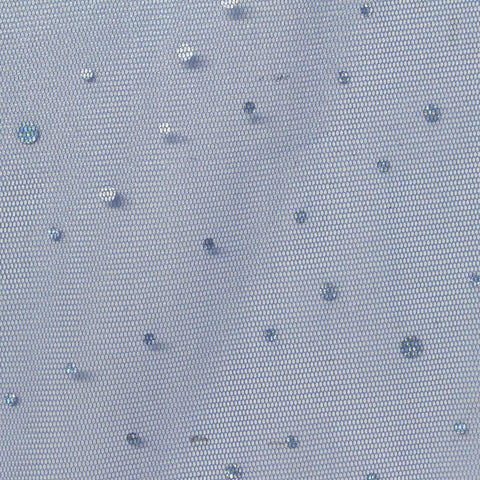
100% Polyester Mesh Fabric, 23 gsm, 150 cm — Blue

100% Polyester Mesh Fabric, 38 gsm, 160 cm — Purple

Black Chevron Mesh, Nylon-Spandex, 126 gsm

Mesh Fabric, 135 gsm, 145 cm — Multi

100% Polyester Mesh Fabric, 38 gsm, 160 cm — Green

100% Polyester Mesh Fabric, 18 gsm, 160 cm — White
